Optogenetics: the 2026 Nobel Prize in Medicine, a lecture
A lecture for biology students on the 2026 Nobel Prize in Physiology or Medicine: what optogenetics is, how channelrhodopsin was found in an alga, the steps from 2002 to living mice in 2007, how an experiment works and what it has shown. Facts from the Nobel Assembly's press release and the original papers, with a sources slide.
A fact sheet compiled on 12 November 2026 from the Nobel Assembly's press release of 5 October 2026 and the original papers. Open the original
With these instructionsA lecture for second-year biology students on the 2026 Nobel Prize in Physiology or Medicine: what optogenetics is, how it was discovered and how an experiment works. Use only the facts and figures in the fact sheet. End with a sources slide.
Type this code on PPTNative, or open pptnative.com/c/LEC111, to come back to this deck. Make your own deck from here and it gets the same look (style, colours and fonts), not the same slides.
Free to download, no sign-in needed. Open it in PowerPoint and change anything.

- Look
- Lecture Blocks
- Deck type
- Workshop Teaching
- Images
- No images
- Slides
- 10
- Deck language
- English
Every slide, unedited
Click a slide to see it large.
-
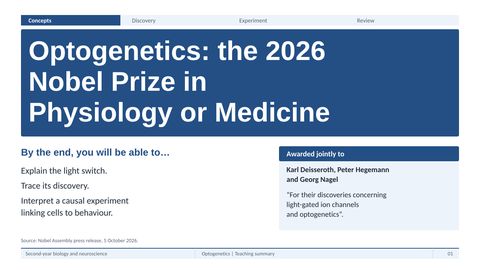
1Optogenetics: the 2026 Nobel Prize in Physiology or Medicine
-
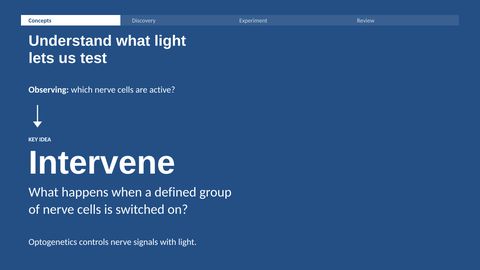
2Understand what light lets us test
-
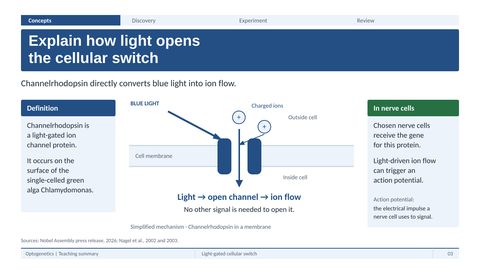
3Explain how light opens the cellular switch
-
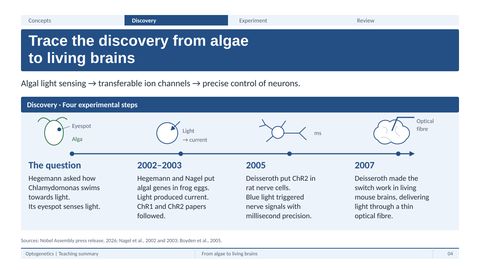
4Trace the discovery from algae to living brains
-
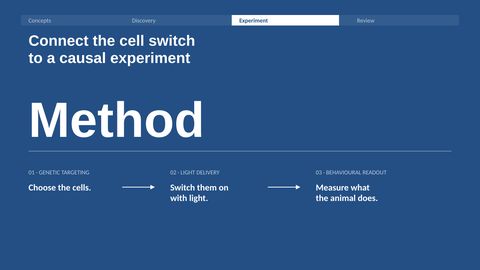
5Connect the cell switch to a causal experiment
-
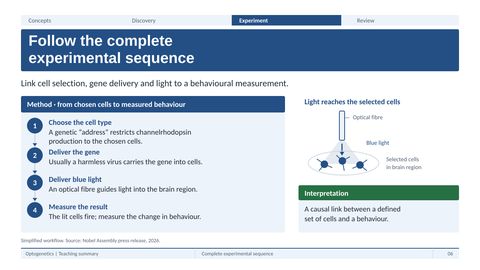
6Follow the complete experimental sequence
-
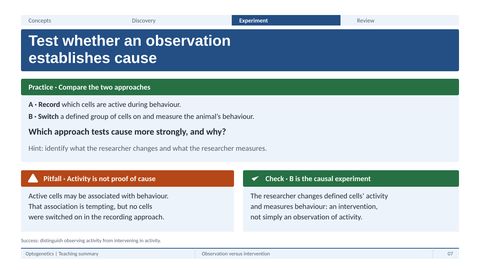
7Test whether an observation establishes cause
-
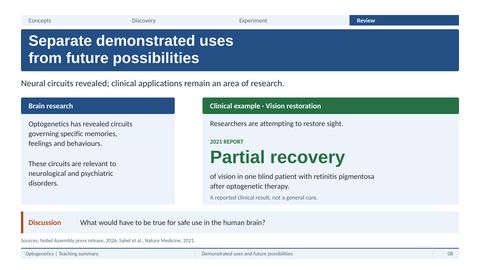
8Separate demonstrated uses from future possibilities
-
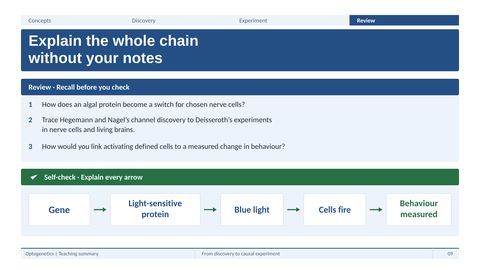
9Explain the whole chain without your notes
-
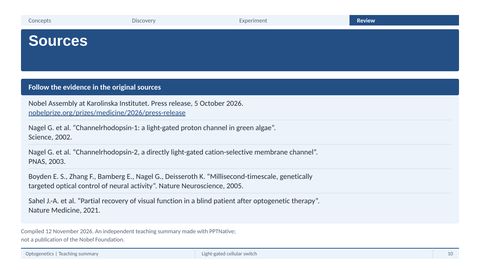
10Sources


What you can change in the file
Every word is real text
Titles, bullets and labels are text boxes. Retype them, restyle them or translate them.
Diagrams are shapes
Boxes, arrows and icons are PowerPoint shapes you can move, resize and recolour.
Pictures stay separate
Photos and illustrations are their own images, so you can swap or crop them.
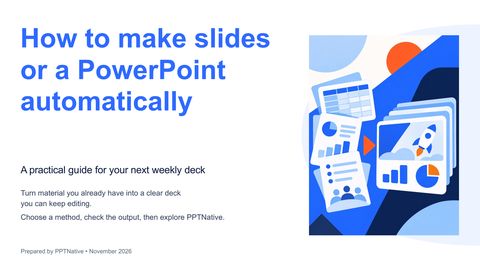 How to make slides or a PowerPoint automatically
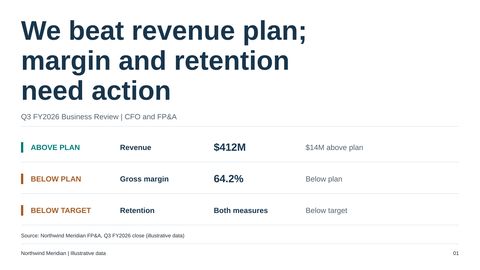 Quarterly business review: performance, drivers and decisions
 Luxury hospitality: a flagship hotel investment proposal
Make your next deck in minutes, then make it yours.
Start with 20 free credits. No card needed.
Start free